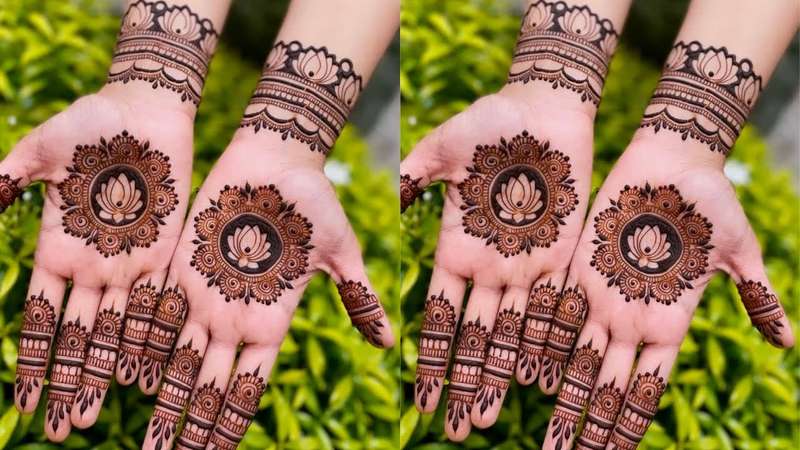
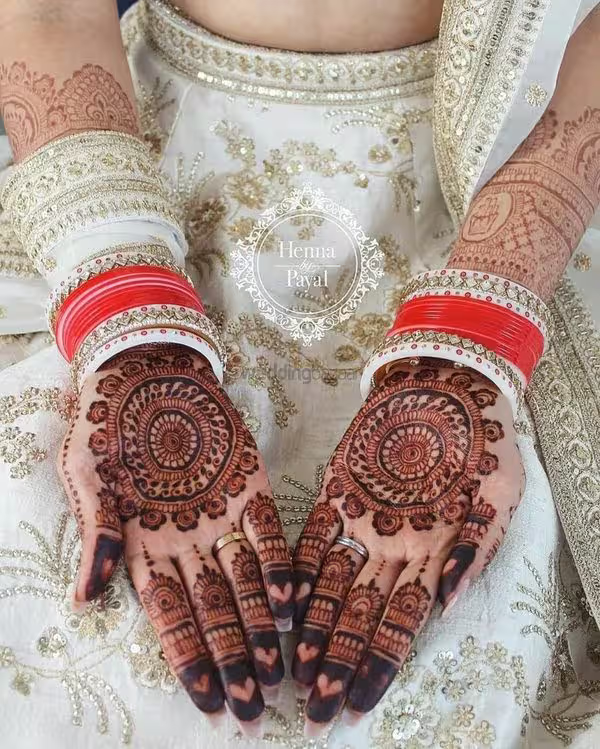
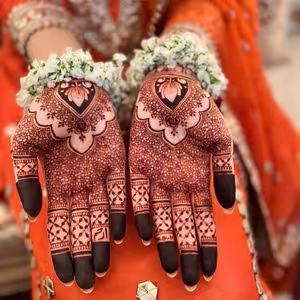
Looking for more?
Explore our gallery for thousands of high-quality mehndi designs and inspirations.
View Full GalleryArabic Mehndi Designs: Bold, Beautiful and Timeless Patterns
The Distinctive Allure of Arabic Mehndi
In the vast and diverse world of henna art, Arabic mehndi occupies a unique position—bold where others are delicate, spacious where others are dense, and dramatic where others are understated. This style, rooted in the artistic traditions of the Middle East and North Africa, has captivated people across the globe with its flowing lines, generous use of negative space, and striking visual impact that can be appreciated from across a room.
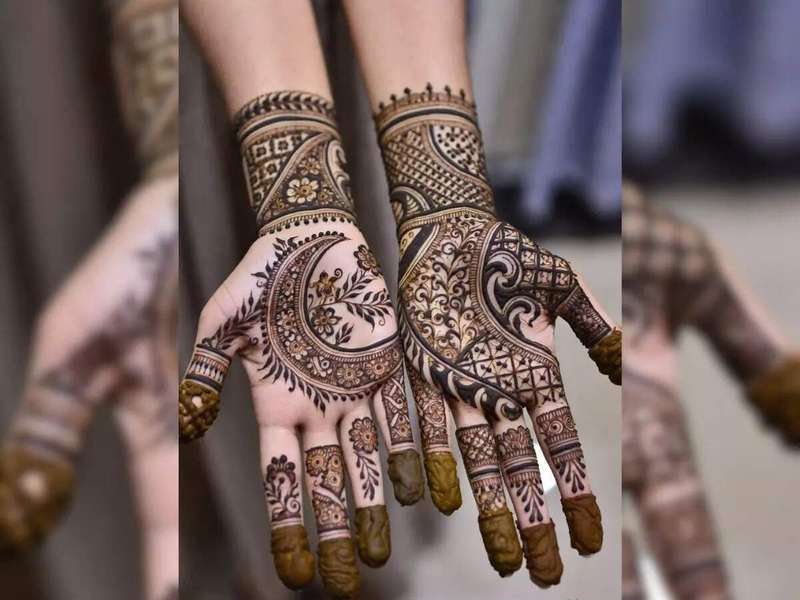
While Indian mehndi traditions emphasize intricate detail and full coverage, Arabic mehndi takes the opposite approach: less is more. A single vine trailing from fingertip to forearm, rendered with bold outlines and heavy shading, can be just as breathtaking as the most densely packed Rajasthani bridal design. This accessibility—both in application time and visual simplicity—has made Arabic mehndi one of the most popular styles worldwide, embraced by women across cultural backgrounds for celebrations both grand and intimate.
In this exploration, we delve into the history, aesthetics, techniques, and cultural context of Arabic mehndi, examining what makes this style enduringly popular and how it continues to evolve in the hands of contemporary artists.
Historical Roots of Arabic Henna Traditions
The use of henna in the Arab world predates Islam by millennia. Archaeological evidence suggests that henna was used for body decoration, hair dyeing, and even leather tanning in the Arabian Peninsula as far back as the Bronze Age. The henna plant (Lawsonia inermis) thrives in the hot, arid climates of the Middle East, making it a naturally abundant resource in the region.
In pre-Islamic Arabia, henna was associated with celebration, beauty, and spiritual protection. The Prophet Muhammad is reported in various hadith to have recommended henna for dyeing hair and for its cooling properties, and its use was embraced within Islamic culture as a sunnah (recommended practice). This endorsement helped henna traditions spread throughout the rapidly expanding Islamic world, from Andalusia in the west to Indonesia in the east.
The Arabic mehndi style as we recognize it today likely crystallized during the medieval period, as the artistic traditions of the Umayyad and Abbasid caliphates—with their emphasis on arabesque patterns, calligraphic forms, and botanical motifs—influenced all forms of decorative art, including henna application. The flowing, vine-based aesthetic of Arabic mehndi mirrors the arabesques found in Islamic architecture, manuscript illumination, and textile design.
Defining Characteristics of Arabic Mehndi
Several key features distinguish Arabic mehndi from other henna traditions and contribute to its distinctive visual identity:
Bold Outlines and Heavy Shading
The most immediately recognizable feature of Arabic mehndi is its bold line work. Where Indian mehndi artists prize hair-thin precision, Arabic artists work with thicker lines that create strong visual contrast against the skin. These bold outlines are often complemented by heavy shading—a technique where the interior of leaves, petals, and other elements is filled with varying densities of henna to create a gradient effect.
This shading technique gives Arabic designs a distinctly three-dimensional quality. Flower petals appear to curve and fold; leaves seem to catch the light; vines appear to recede into the background. Mastering this shading—achieved through careful control of the cone's pressure and angle—is one of the key skills that separates accomplished Arabic mehndi artists from beginners.
Flowing Vine and Trail Compositions
Arabic mehndi compositions are typically organized around one or more flowing vine trails that wind across the hand, up the arm, or along the foot. Unlike the radial, mandala-based compositions common in Indian mehndi, Arabic designs are linear and directional—they have a sense of movement and flow, as though the pattern is growing organically across the skin.
These vine trails serve as the structural spine of the design, with flowers, leaves, paisleys, and other motifs branching off at regular intervals. The vine itself is often rendered as a gently curving, thickened line, sometimes with small thorns or nodes to suggest botanical realism.
Strategic Use of Negative Space
Perhaps the most distinctive aspect of Arabic mehndi is its relationship with negative space—the uninked skin that surrounds and flows through the design. In Indian bridal mehndi, the goal is often to cover as much skin as possible; in Arabic mehndi, the bare skin is an integral part of the composition.
Negative space in Arabic mehndi serves several purposes:
- It creates visual breathing room that prevents the design from feeling overwhelming.
- It establishes contrast that makes the inked elements appear bolder and more impactful.
- It allows the design to complement the natural contours of the hand and fingers rather than obscuring them.
- It reduces application time, making Arabic mehndi practical for events where multiple guests need to be hennaed.
Gulf-Style Versus Levantine Arabic Mehndi
Within the broad category of Arabic mehndi, two regional substyles deserve particular attention, each reflecting the aesthetic preferences and cultural context of its origin.
Khaleeji (Gulf) Style
Khaleeji mehndi, originating from the Persian Gulf states—Saudi Arabia, UAE, Kuwait, Bahrain, Qatar, and Oman—is known for its dramatic, large-scale floral compositions and heavy use of shading. Gulf-style designs tend to be bolder and more spacious than their Levantine counterparts, with fewer but larger motifs that make a powerful visual statement.
Khaleeji mehndi often features:
- Large, open flowers: Multi-petaled blooms rendered with bold outlines and dark shading, often positioned as the central focal element of the design.
- Broad leaves: Generously sized leaf motifs with prominent veining and dramatic shading gradients.
- Minimal finger coverage: Traditional Khaleeji designs may leave the fingers largely bare or adorn them with simple bands, dots, or small accent motifs.
- Emphasis on the back of the hand: Gulf-style designs are often optimized for display on the dorsal side of the hand, as this is the most visible surface in daily life.
The cultural context of Khaleeji mehndi is important to understanding its aesthetic. In Gulf societies, henna is applied regularly—not only for weddings but for Eid celebrations, Fridays, and other occasions. This frequency of application favors designs that are quick to apply yet visually striking, explaining the preference for bold, spacious compositions.
Levantine and North African Influenced Styles
Arabic mehndi traditions in the Levant (Syria, Lebanon, Jordan, Palestine) and in countries where Arabic and Berber cultures intersect tend toward somewhat more detailed compositions. While still maintaining the signature Arabic boldness, Levantine-influenced designs may incorporate finer line work, more complex internal patterning, and elements that bridge Arabic and geometric North African traditions.
These cross-cultural influences create a fascinating spectrum of Arabic mehndi substyles, each reflecting the unique cultural intersections of its region.
Popular Motifs in Arabic Mehndi
Arabic mehndi draws from a relatively focused palette of motifs, each rendered with variations that allow infinite creative expression:
Floral Elements
Flowers are the heart and soul of Arabic mehndi. Unlike the stylized, geometric florals common in Indian designs, Arabic flowers tend toward a more naturalistic, botanical quality. Multi-petaled roses, jasmine sprays, daisy-like blooms, and abstract open flowers are staples of the style. Each petal is typically outlined boldly and filled with shading that suggests depth and dimension.
Leaves and Vines
Leaf motifs in Arabic mehndi range from simple, teardrop-shaped forms to complex, multi-veined designs with serrated edges. They are arranged along vine trails in alternating patterns, creating rhythm and visual movement. The leaves often receive heavy shading—typically darker at the base and lighter toward the tip—that gives them remarkable visual weight.
Paisleys and Spirals
The paisley motif, while most associated with Indian design, appears frequently in Arabic mehndi as well—a reflection of the motif's ancient Persian origins and its widespread adoption across Islamic art traditions. Arabic paisleys tend to be larger and simpler than their Indian counterparts, often serving as the terminus of a vine trail or as a secondary focal element.
Dots and Accent Elements
Small dots, dashes, and teardrop accents play a crucial supporting role in Arabic mehndi. Arranged in clusters, lines, or crescents around major motifs, they add texture and visual interest without contributing to the density of the design. These accent elements also help to bridge the transition between inked areas and negative space, softening edges and creating visual coherence.
Arabic Mehndi for Different Occasions
One of Arabic mehndi's greatest strengths is its versatility across occasions. The style's inherent flexibility allows it to be scaled from a simple ten-minute design to an elaborate bridal creation:
- Eid celebrations: Arabic mehndi is enormously popular during Eid al-Fitr and Eid al-Adha. Designs for Eid tend to be moderate in scope—a flowing trail on the back of the hand, a finger-to-wrist composition, or a palm mandala with Arabic styling. The goal is a beautiful, celebratory design that can be completed quickly enough for entire families to participate.
- Weddings: Arabic bridal mehndi may cover both hands and extend to the forearms, incorporating the bride's personal motif preferences and sometimes elements from the wedding color palette. While less extensive than traditional Indian bridal mehndi, Arabic bridal designs compensate with their dramatic visual impact.
- Casual and everyday wear: Simple Arabic patterns—a vine along one finger, a single flower on the wrist, or a small cluster of leaves on the back of the hand—are popular as everyday accessories in Gulf countries, where wearing henna casually carries no special occasion requirement.
- Festivals and parties: Arabic mehndi's quick application time makes it ideal for event settings where an artist must serve many guests. A skilled artist can complete a beautiful Arabic design in fifteen to thirty minutes, compared to the hours required for full Indian bridal work.
How Arabic Mehndi Differs from Indian Styles
While Arabic and Indian mehndi share the same medium—henna paste applied to skin—they differ profoundly in philosophy and execution. Understanding these differences helps both clients and artists make informed choices:
- Coverage: Indian mehndi aims for comprehensive coverage; Arabic mehndi celebrates selective placement and open space.
- Line weight: Indian styles use fine, uniform lines; Arabic styles use varied line weights with bold outlines and thinner internal details.
- Composition: Indian designs are often radially symmetrical, centered on a mandala; Arabic designs are linear and flowing, following the natural lines of the hand.
- Shading: Shading is a defining feature of Arabic mehndi but is used sparingly in traditional Indian work (though modern Indian artists increasingly incorporate it).
- Motif treatment: Indian motifs tend toward geometric stylization; Arabic motifs lean toward botanical naturalism.
- Application time: A full Arabic design typically takes thirty minutes to two hours; comparable Indian designs may take three to eight hours.
Neither style is superior to the other—they represent different artistic philosophies, each perfectly suited to its cultural context and aesthetic goals. Many contemporary artists are skilled in both traditions and offer Indo-Arabic fusion designs that combine the best elements of each. Explore both styles in our gallery to see these differences and fusions in action.
Mastering Arabic Mehndi: Technique Tips for Artists
For henna artists looking to develop their Arabic mehndi skills, several technical considerations are essential:
Cone Control and Pressure Management
Arabic mehndi demands excellent cone control, particularly for the thick-to-thin line transitions that define the style. Artists should practice:
- Pressure variation: Learning to smoothly transition from heavy pressure (for bold outlines) to light pressure (for thin internal lines) within a single stroke.
- Consistent shading: Developing a steady hand for filling large petal and leaf areas with even, gradient shading—achieved by applying closely spaced parallel lines or stippled dots.
- Clean edges: Bold Arabic designs are unforgiving of wobbly lines. Practice flowing, confident strokes on paper before moving to skin.
Composition and Flow
Planning the flow of an Arabic design before touching cone to skin is critical. Consider:
- The direction of the main vine trail and how it will interact with the fingers and wrist.
- The placement of focal flowers—typically at curves in the vine or at the center of the back of the hand.
- The balance between inked and uninked areas, ensuring the negative space feels intentional rather than empty.
- How the design will look from multiple angles, as Arabic mehndi is often most visible on the back of the hand during daily activities.
Caring for Your Arabic Mehndi Design
The aftercare principles for Arabic mehndi are similar to those for all henna, but a few points deserve special emphasis:
- Stain variation by area: Arabic designs that span from palm to back of hand will show natural stain variation—darker on the palm (where skin is thicker) and lighter on the dorsal side. This is normal and expected.
- Protecting bold elements: The large, heavily shaded elements of Arabic mehndi are particularly vulnerable to premature fading from water exposure. Applying oil before hand washing and wearing gloves for household chores can extend the life of the design significantly.
- Duration: A well-cared-for Arabic mehndi design typically lasts seven to fourteen days, gradually fading as the outer layer of skin naturally exfoliates.
Arabic mehndi stands as a testament to the power of simplicity and confidence in art. Its bold lines, flowing compositions, and strategic restraint have made it one of the most beloved and widely practiced henna styles in the world. Whether you are drawn to the dramatic flair of Khaleeji designs or the botanical elegance of Levantine-influenced patterns, Arabic mehndi offers a rich tradition of beauty that transcends borders and cultures. Visit our blog for more inspiration and expert guides on henna artistry from around the world.
Frequently Asked Questions (FAQs)
How is Arabic mehndi different from Indian mehndi?
Arabic mehndi focuses on bold outlines, prominent negative space, and flowing, vine-like structures with heavy shading. Indian mehndi typically features highly detailed, symmetrical, and full-coverage designs packed with intricate motifs and human figures.
Is Arabic mehndi quicker to apply?
Yes, because Arabic designs use negative space and bolder, larger motifs instead of tiny intricate details, they generally take significantly less time to apply, making them popular for quick appointments and festivals.
Can Arabic mehndi be used for bridal designs?
Absolutely. Arabic bridal mehndi is very popular, especially for modern brides or those in the Middle East. It can be extended up the arm to create a dramatic, elegant look while maintaining its characteristic flowing aesthetics.
Mehndi Design Henna Editorial Team
Henna Art & Cultural SpecialistsOur dedicated team of professional henna artists, cultural researchers, and beauty enthusiasts curate comprehensive guides, traditional patterns, and modern mehndi trends from around the world.
Browse Related Mehndi Designs
Read Next
Indian Mehndi Styles: Traditional Rajasthani, Mughal and Bridal Designs
Explore the rich diversity of Indian mehndi styles including Rajasthani, Mughal, South Indian and bridal patterns with expert tips and cultural insights.
Minimalist Mehndi: Modern Henna Designs for Everyday Elegance
An in-depth, comprehensive look at Minimalist Mehndi: Modern Henna Designs for Everyday Elegance. Discover the history, techniques, and modern trends shaping this beautiful art form.
25 Easy Mehndi Design Ideas You Can Try at Home (Beginner-Friendly)
Mehndi is a beautiful way to decorate your hands. Discover 25 easy mehndi designs and simple henna patterns that beginners can try at home for weddings and festivals.