
.avif)
Looking for more?
Explore our gallery for thousands of high-quality mehndi designs and inspirations.
View Full GalleryIndonesian Henna Art: Javanese and Balinese Mehndi Traditions
The Unique Beauty of Indonesian Henna Art
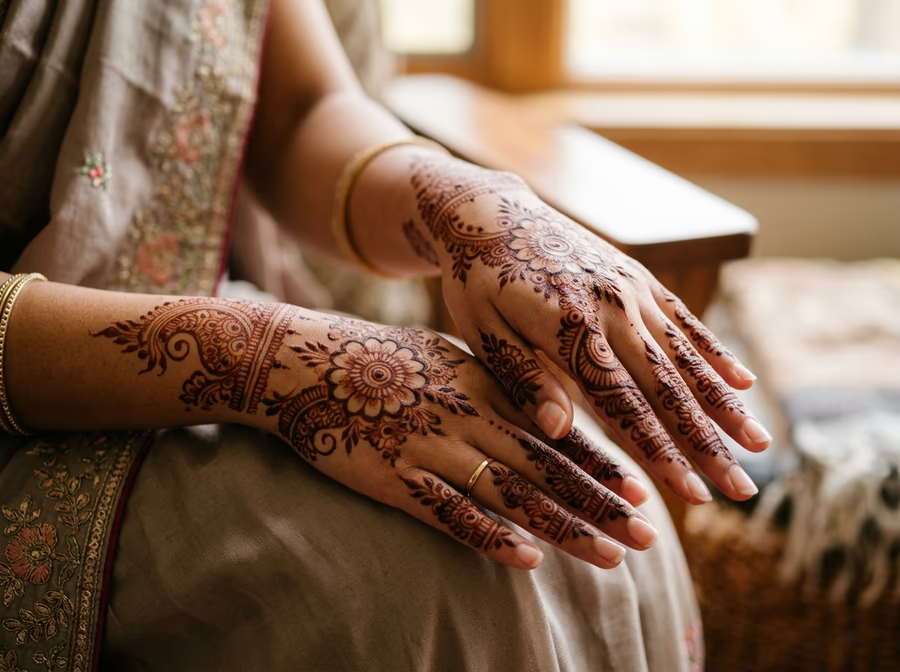
When people think of henna, they often picture the dense patterns of India or the flowing floral trails of the Middle East. However, Indonesian henna has a rich, distinctive aesthetic that reflects the diverse cultural tapestry of the archipelago.
Blending indigenous Southeast Asian artistry with Islamic geometric traditions and Hindu-Buddhist motifs, Indonesian mehndi is unlike any other style in the world. It is a celebratory art form deeply tied to weddings, religious festivals like Eid, and cultural ceremonies across the islands.
If you're looking for inspiration that is both elegant and culturally profound, exploring Indonesian henna traditions is a wonderful journey.
Javanese Traditions: The Midodareni Ceremony
In Java, Indonesia's most populous island, henna is an essential part of traditional wedding preparations. The most famous ritual involving henna is the Midodareni ceremony.
Held the night before the wedding, the Midodareni is often called the "night of the angels." According to Javanese belief, heavenly angels descend to earth on this night to bless the bride and enhance her beauty. During this intimate gathering of female relatives and close friends, the bride remains in her room while older women apply henna to her hands and nails.
Traditional Javanese henna designs are often simpler than elaborate South Asian bridal mehndi. They historically focused on solid red or orange stained fingertips and simple floral or star motifs on the center of the palm. Today, modern Javanese brides often combine these traditional elements with more intricate lace-like patterns.
Balinese Henna: Temple Art and Blessings
Bali, with its unique Hindu-Balinese culture, incorporates henna in a different context. While not historically a mandatory bridal tradition in the same way it is in Java, henna art has grown in popularity for both weddings and temple ceremonies.
Balinese designs draw heavily from the island's breathtaking temple architecture and wood carvings. You will frequently see:
- Lotus Motifs: Representing purity and spiritual awakening.
- Intricate Mandalas: Symmetrical geometric patterns symbolizing the universe.
- Frangipani (Jepun) Flowers: The iconic flower of Bali, woven into flowing vine patterns.
The Influence of Batik on Indonesian Mehndi Patterns
Perhaps the most defining characteristic of modern Indonesian henna art is the influence of Batik.
Batik is a traditional Indonesian technique of wax-resist dyeing applied to whole cloth, famous worldwide for its intricate, repeating patterns. Indonesian henna artists frequently adapt famous Batik motifs directly onto the skin.
Common Batik-inspired henna elements include:
- Kawung: A repeating circular pattern resembling a cross-section of palm fruit, symbolizing purity and perfection.
- Parang: A diagonal, knife-like pattern representing strength and perseverance.
- Megamendung: Cloud-like patterns originating from Cirebon, symbolizing patience and a cool head.
When these textile patterns are translated into henna, they create stunning, structured designs that stand apart from the organic, free-flowing vines of Arabic styles.
Modern Indonesian Henna Trends
Today, Indonesian henna artists are celebrated for their incredible precision and fusion styles. A popular contemporary trend is White Henna (which is actually a body-safe adhesive paint, not natural henna). The bright white patterns contrast beautifully with the colorful traditional Kebaya (Indonesian dress) worn during wedding ceremonies.
Modern brides also love combining traditional Javanese or Balinese elements with dense Indian-style finger work, creating a "best of both worlds" aesthetic that honors their heritage while looking spectacularly ornate.
Frequently Asked Questions
What is the Midodareni ceremony?
The Midodareni is a traditional Javanese pre-wedding ceremony held the night before the wedding. It is believed that angels descend to bless the bride. During this time, female relatives gather to apply henna to the bride's hands and nails.
Are Indonesian henna designs different from Indian mehndi?
Yes. While they share similarities, Indonesian henna often incorporates local cultural elements such as Javanese floral motifs, Balinese temple art, and patterns inspired by traditional Batik textiles, making it distinctly Southeast Asian.
Final Thoughts
Indonesian henna art is a beautiful reflection of the country's motto: Bhinneka Tunggal Ika (Unity in Diversity). By blending elements from Java, Bali, Sumatra, and beyond, Indonesian mehndi artists create masterpieces that are steeped in history and cultural pride.
Whether you are attending an Indonesian wedding, celebrating Eid, or simply looking for unique design inspiration, looking to the archipelago offers a wealth of breathtaking patterns to explore.
Mehndi Design Henna Editorial Team
Henna Art & Cultural SpecialistsOur dedicated team of professional henna artists, cultural researchers, and beauty enthusiasts curate comprehensive guides, traditional patterns, and modern mehndi trends from around the world.
Browse Related Mehndi Designs
Read Next
Moroccan Henna Art: Exploring Ancient Berber Traditions and Geometric Patterns
Journey through Moroccan henna traditions from ancient Berber geometric patterns and Amazigh symbolism to the skilled hannaya artists of Fez and Marrakech.
African Henna Traditions: Cultural Heritage from Sudan, Somalia and Beyond
An in-depth, comprehensive look at African Henna Traditions: Cultural Heritage from Sudan, Somalia and Beyond. Discover the history, techniques, and modern trends shaping this beautiful art form.
25 Asian Henna Designs: Beautiful Ideas for Weddings, Festivals & Celebrations
Explore 25 beautiful Asian henna designs inspired by South Asian, Middle Eastern and modern styles. Find elegant ideas for weddings, festivals and special occasions.